Every year I feel it around this time — the water starts cooling, the striper bite peaks, and I catch myself scanning the rocky bottom marks on the chartplotter east of Mount Sinai and thinking about tautog. Fall blackfish season on the Long Island Sound opens October 11, and if you've never done one of these trips, this is your invitation. Here's what to expect, why our setup is a real edge on rocky structure, and how to grab one of the good weekends before they're gone.
Why fall blackfish is a bucket-list trip
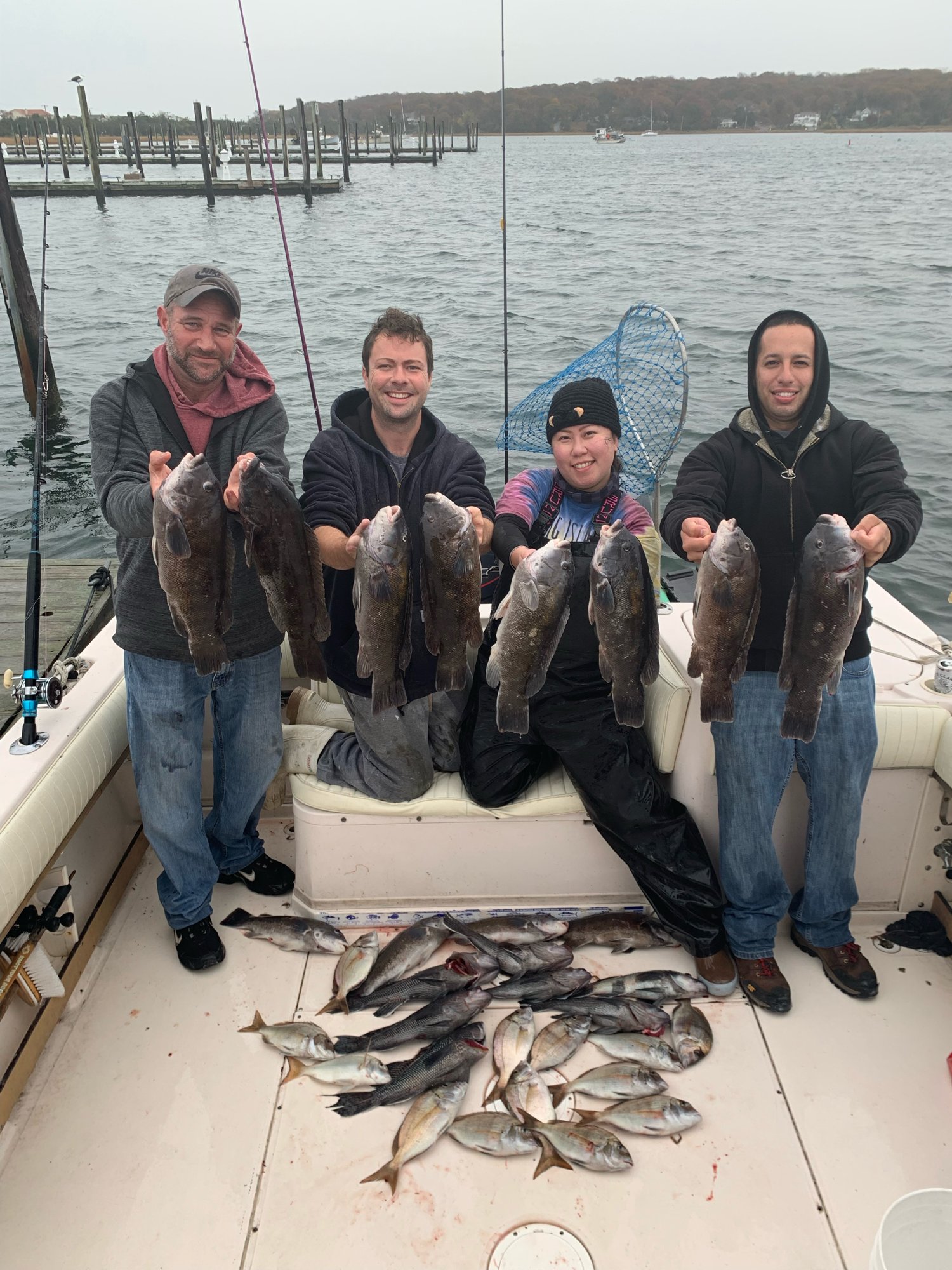
Two reasons. First, they're a serious fish. Tautog fight like nothing else in the Sound — short, heavy, dirty runs into the rocks that will test your drag and your knot. Second, they're one of the best-eating fish in the Northeast. Firm, white, sweet meat. Skippy cleans them at the dock; you take home dinner. Combine "hard-fighting" with "great table" and you've got the exact reason our fall calendar fills up first.
Where we fish for them
Blackfish are structure fish. They live on rock piles, wrecks, mussel beds and hard-bottom ledges — and the central Long Island Sound east of Mount Sinai is genuinely one of the best zones on the East Coast for them. We work the shoals and rocky drop-offs from Rocky Point out through Shoreham and Wading River, plus the Middle Grounds and the deep wrecks on the Connecticut side when the weather cooperates. On a normal fall Saturday we'll hit two or three spots before the session's done, moving whenever the bite slows.
The Minn Kota advantage
Here's where our boat has a real edge. Blackfishing on rocky structure normally means anchoring — which means losing anchors to the rocks, hauling anchor to move, and fighting to hold position when the current picks up. Our Christina M II has a Minn Kota trolling motor with spot-lock. We hold directly over the fish, quietly, and reposition in seconds when they move. Especially in November when the wind is up and the sea is snotty, that difference is huge.
Bait and rigs
We come out with fresh live green crabs — halved or quartered depending on size, threaded on a heavy-gauge hook. That's the standard, and there's a reason: tautog will crush a green crab all day. We rig with a custom two-hook dropper rig or a modern blackfish jig depending on how the fish are eating. Both work. The jig has been getting more of our attention lately because you can feel the bite better and the fixed hook means fewer missed fish.
Reading the bite is the whole game. Tap-tap-tap, then a slow pull. Set on the pull, never the taps. Miss that and you'll pull hooks all day.
What to bring, what to expect
Layers. It gets cold out there — even a 55° air temp on land feels like 40° on the water. We have a heated cabin between drops, which is a real feature in November, but you'll still want a good jacket and gloves. Closed-toed shoes required. Snacks and water are your call; hot coffee if you want to bring it. Trip is six hours on the water. If you want the full breakdown of technique, see our Fall Blackfish Techniques guide.
Rates and what's included
Fall Blackfish trips are $700 per boat for 1–4 anglers, October 11 – November 30. Included: custom blackfish rigs and jigs, live green crabs, heated cabin between drops, and your catch cleaned and bagged at the end. A $150 non-refundable deposit holds the date. See the Fall Blackfish trip page for the full breakdown.
Book early — the good dates go fast
Every year I say this and every year people wait. October and early November Saturdays fill up first, and the middle-of-the-week trips are actually often better fishing anyway (less pressure, more cooperative fish). If you want the season opener weekend, book it now. If you want a specific Saturday in October, book it now. Otherwise call or text 631-252-6536 and we'll find you a slot.
Book fall blackfish now.
Six hours, custom rigs, live green crabs, heated cabin. $700 / boat, 1–4 anglers.